Enhancing the value of traditional salt pans through biotechnology
In addition to salt production, there is an ecosystem with untapped potential
Sal+ is a project run by the Centre for Marine Sciences (CCMAR) that aims to enhance the production of sea salt and fleur de sel in the traditional salt pans of the Algarve through biotechnology, environmental monitoring and innovation.
Although salt production is seasonal, the salt pans remain active as ecosystems throughout the year, offering potential that is as yet largely untapped. In this context, the project focuses on characterising production systems, improving the quality and safety of the salt, and creating new opportunities for added value, thereby promoting a sustainable approach to salt production.
Biotechnology and sustainability
An active ecosystem beyond salt production
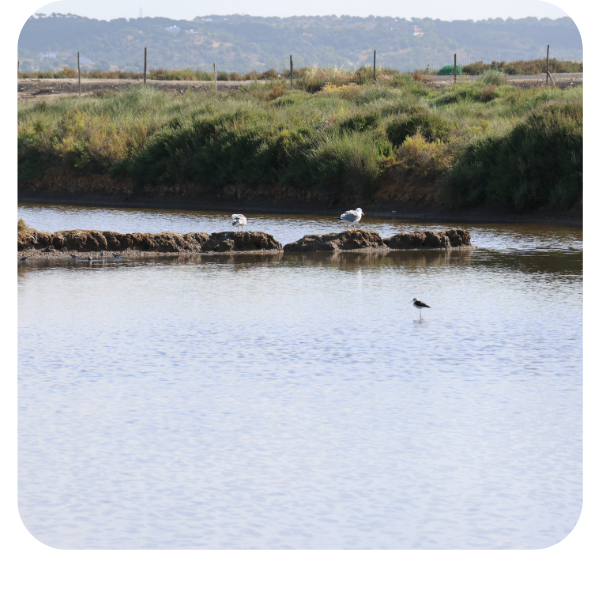
Sea salt production takes place only during part of the year, but the salt pans remain ecologically active, maintaining a high level of biodiversity and serving as essential habitats for a variety of species, playing a significant role in the conservation of coastal ecosystems.

Salt flats are home to microorganisms adapted to highly saline environments, which hold great potential for a wide range of applications.
Active biodiversity

They contribute to the ecological balance of coastal areas by regulating natural processes and supporting various forms of life.
Ecological balance

They offer significant economic potential, not only through salt production, but also through the development of tourism and related activities.
Economic potential

They form a sustainable system, based on the balanced use of natural resources and with a low environmental impact.
Sustainable system

 Salt pans
Castro Marim
The Castro Marim salt pans are an ancient system for producing sea salt of great ecological and cultural value, where traditional practices adapted to natural conditions are still in use and coexist with a sensitive coastal ecosystem, contributing to biodiversity and offering potential for sustainable development through a balanced approach to management that combines conservation and development.
Workpackages
01
Characterisation and
Environmental Monitoring
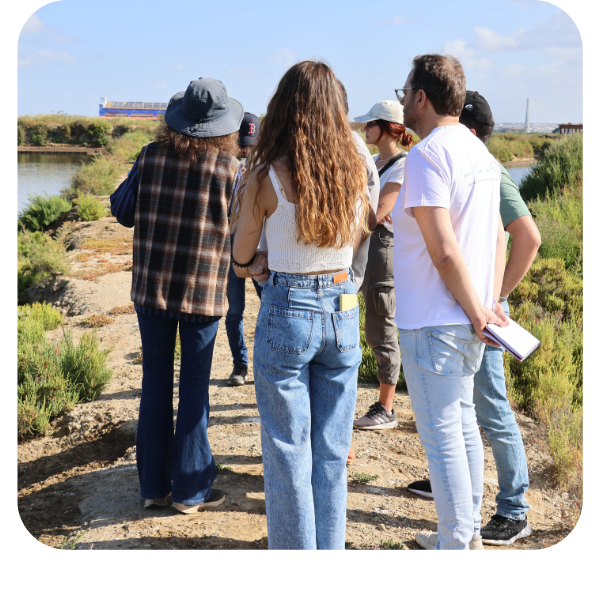
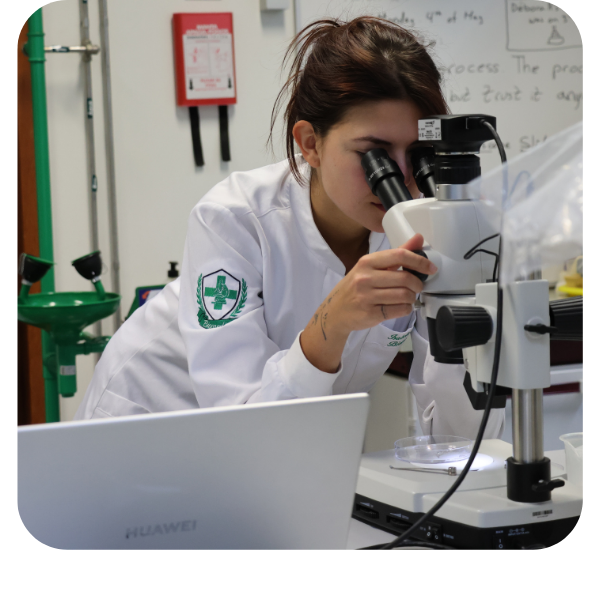
The physico-chemical and microbiological analysis of salt flats, together with the monitoring of contaminants such as heavy metals, organic compounds and microplastics, enables us to understand how these ecosystems function and ensures more sustainable and informed management.
02
Biotechnology and
resource recovery
The use of microorganisms adapted to highly saline environments and the recovery of resources such as brine, which is wastewater with a high concentration of salt and minerals resulting from production, enable the development of new applications with industrial and biomedical potential, thereby promoting innovation and economic diversification within the sector.
03
Quality,
safety and traceability
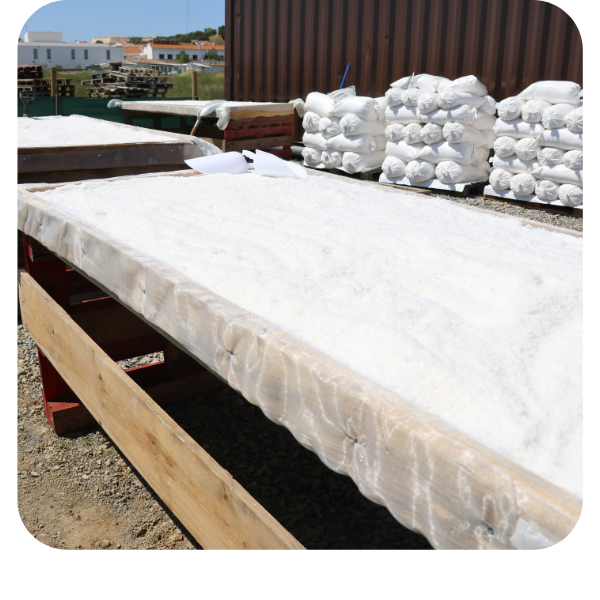
The implementation of quality control and traceability strategies ensures the consistency and safety of sea salt and fleur de sel, helping to enhance the product’s value and ensure compliance with standards and certifications.
04
Sustainability and
dissemination
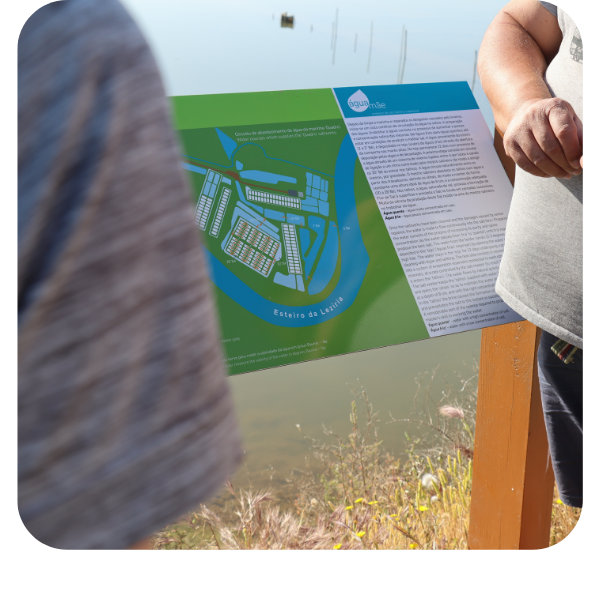
The sharing of knowledge and the promotion of traditional practices contribute to the preservation of the salt pans as a natural and cultural heritage, promoting more sustainable management and enhancing their impact at a regional level.
Partners
We rely on the support of local partners and organisations, whose contribution is essential to developing and implementing the SAL+ project, promoting the enhancement and sustainability of traditional salt farming in the Algarve:
Project logo
Funders of the project
Supported by the “la Caixa” Foundation’s Promove Programme, in collaboration with BPI and the Foundation for Science and Technology (FCT)