Salt Pans
Castro Marim Salt Pans
The value of traditional salt pans
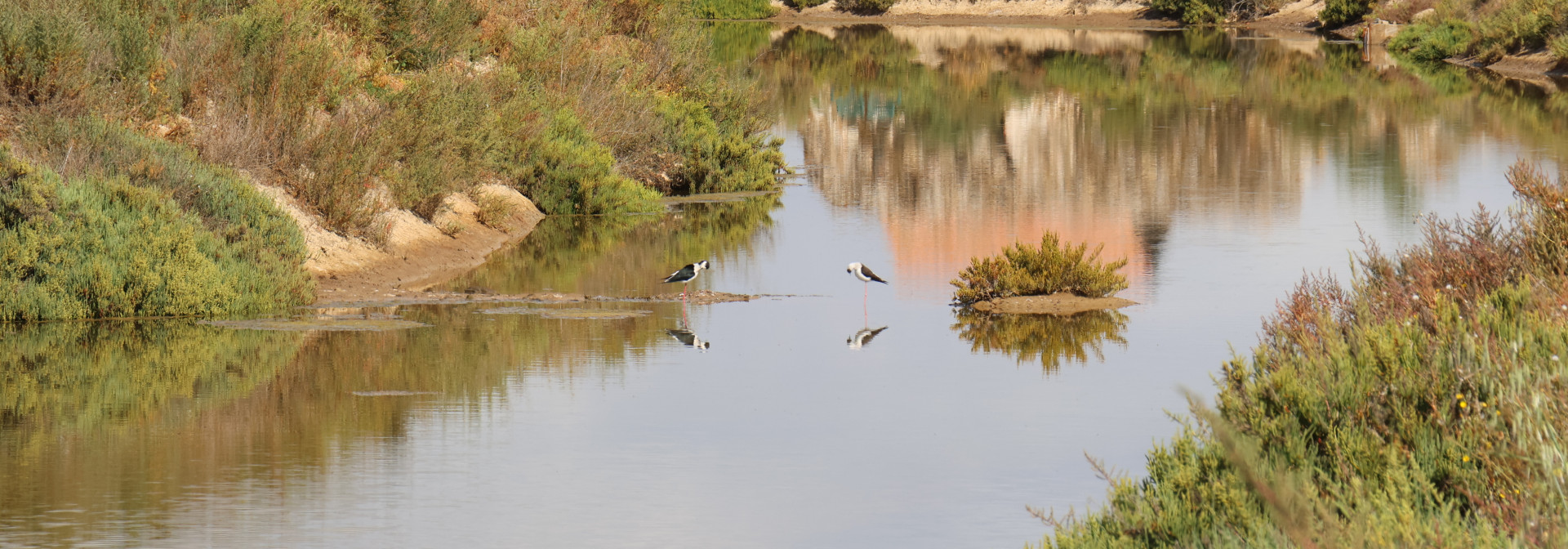
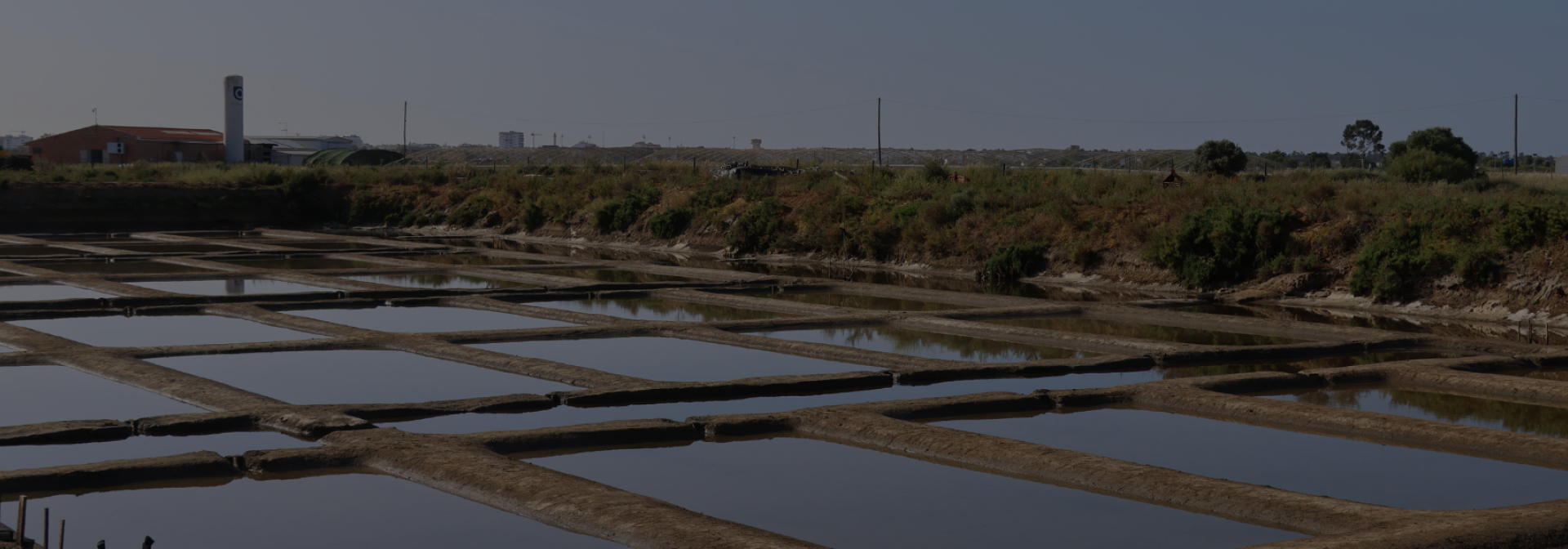
The traditional salt pans of Castro Marim are production systems with centuries of history, where the production of sea salt is the result of a natural process based on the evaporation of seawater. In addition to their productive function, these salt pans constitute ecosystems of great environmental importance, contributing to biodiversity and the balance of coastal ecosystems.
What is traditional sea salt?
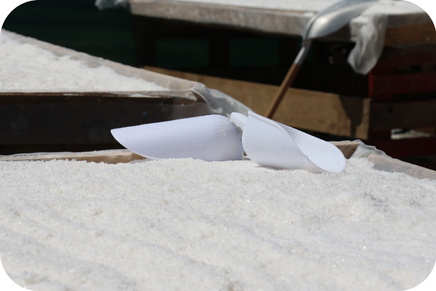
Traditional sea salt is produced using traditional methods, without the use of industrial processes, through the natural evaporation of seawater.
This method preserves the salt’s natural characteristics, including its mineral composition, texture and flavour, setting it apart from industrially produced refined salt.
 Traditional salt
- Handcrafted
- Natural evaporation
- Retains natural minerals
- Sustainable process
 Industrial salt
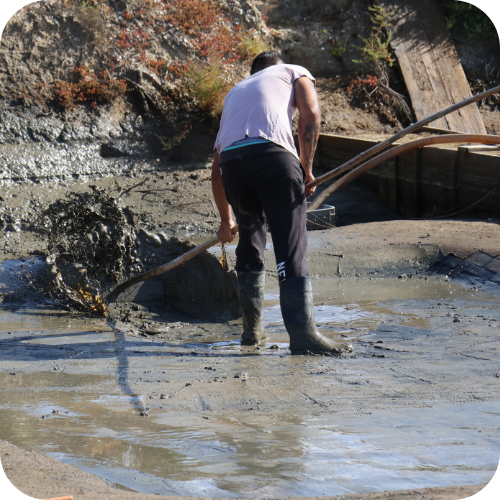
- Mechanised production
- Processing and refining
- Mineral loss
- Focus on large-scale production
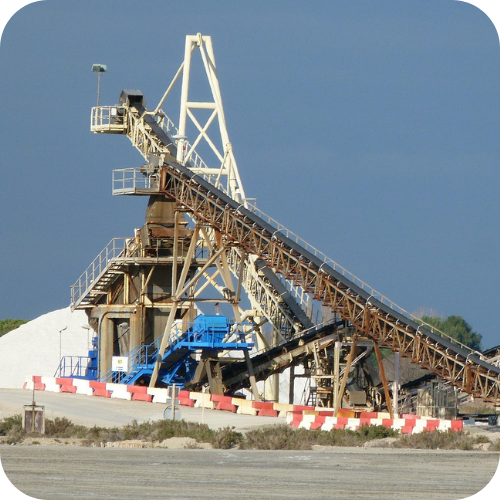
Traditional salt vs industrial salt
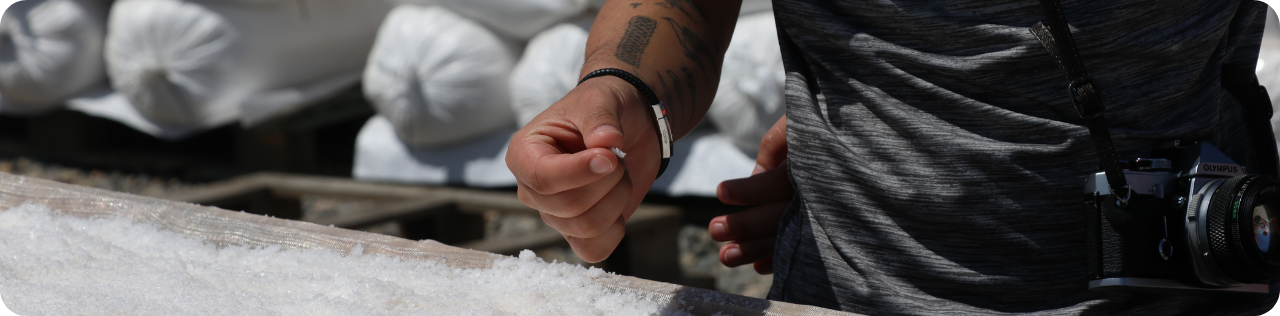
What is fleur de sel ?
Fleur de sel is the thinnest and most delicate layer of crystals that forms on the surface of the water in salt pans, under specific conditions of temperature, wind and evaporation.
It is harvested by hand, usually during the hottest and most stable days of summer, and can be collected daily whenever conditions are favourable. It is considered a premium product due to its light texture, purity and artisanal harvesting process.
Furthermore, it retains a greater variety of natural minerals present in seawater, such as magnesium, calcium and potassium, which contribute to its more complex flavour and enhance its value in food consumption.
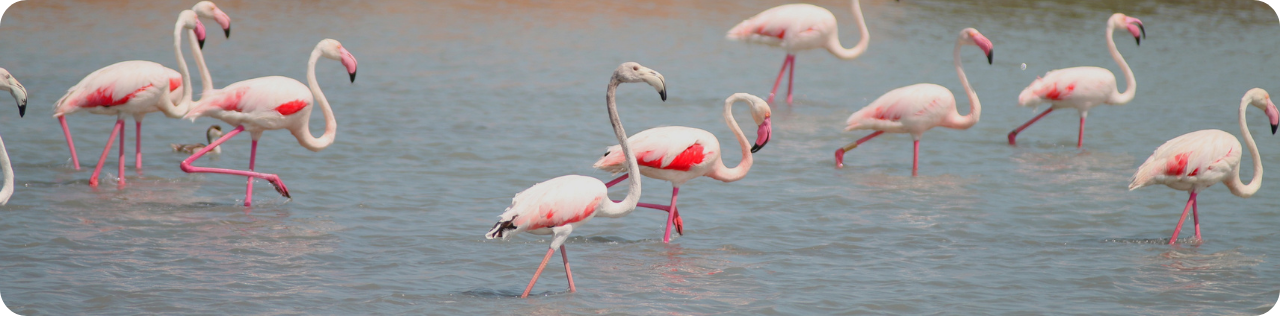
Why are flamingos pink ?
Flamingos owe their pink colour to their diet, particularly in environments such as the Castro Marim salt flats, where they find ideal conditions for feeding on small organisms that live in very salty water, such as Artemia salina.
Artemia salina contains natural pigments called carotenoids, which are responsible for the colouring. When flamingos feed on these organisms, these pigments accumulate in their bodies over time, becoming visible mainly in their feathers and giving rise to their characteristic pink colour. The greater the presence of these organisms in their diet, the more intense the flamingos’ colouring will be.
Habitat for various
species
Salt flats provide a habitat for birds, microorganisms and other species adapted to hypersaline environments.
Contribution to
biodiversity
These ecosystems promote biological diversity, playing an important role in the natural balance of coastal areas.
Environmental
regulation
Salt pans help to regulate ecosystems, influencing natural cycles and helping to maintain environmental balance.
What is the importance of salt pans?
Promoting, innovating and preserving traditional salt farming
Link to the Sal+ project
The Sal+ project promotes these systems by raising awareness of them, supporting their preservation and fostering innovation, with the aim of strengthening the role of salt pans as productive and ecological spaces.
Through the application of scientific knowledge and biotechnology, the project contributes to improving the quality of sea salt, to the adoption of more efficient practices and to the creation of new opportunities for adding value, both during and outside the production season.
In this way, Sal+ promotes a more sustainable and integrated approach, ensuring that salt pans continue to generate value throughout the year.